An important release is approaching
A web application or API needs an independent, realistic assessment before launch.
03 / PENTEST FREELANCER BERLIN
I examine systems from an attacker’s perspective, confirm vulnerabilities manually and document the attack path, impact and remediation. Comprehensive pentest and EASM engagements are delivered through DSecured.
THE PROJECT QUESTION
You receive manually confirmed findings with reproducible evidence, realistic impact and priorities for developers and decision-makers. Critical results are reported during the test.
WHEN I SUPPORT YOUR TEAM
Scope, depth and rules are agreed first. The assessment then focuses on realistic attack paths, confirms relevant findings manually and translates them into an order your team can act on.
A web application or API needs an independent, realistic assessment before launch.
The test needs a clear scope, robust methodology and professional report.
Historic subdomains, cloud services and forgotten systems need to become visible.
Findings must be reproducible and understandable to the people implementing the fixes.
OFFENSIVE IT SECURITY / DSECURED
This page explains why offensive security is part of my development work. Detailed information about penetration testing, EASM, specialist articles and security research is available at DSecured, together with a specialist team and the processes for larger security engagements.
ATTACK SURFACES / FOCUS
The focus is the relevant attack surface of modern digital products. Testing is manual and supported by targeted automation.
In modern web applications, decisive risks often lie in authentication, authorisation, data flows and business logic. That is where manual testing focuses.
APIs connect applications directly to valuable data and functions. Testing covers endpoints as well as object relationships, role changes, states and chains of functionality.
The application, local data, transport and backend communication are examined as one connected attack surface.
Exposed services, forgotten systems and weak transitions between networks are identified and manually confirmed from an external or internal attacker’s perspective.
Source code analysis exposes trust boundaries, data flows and hidden attack paths. Automated analysis supports the work; understanding architecture and business logic remains decisive.
From a clear scope to a confirmed fix: reproducible evidence, understandable priorities and direct exchange with the development team.
SELECTED EVIDENCE / 2
Selected systems and public tools show how development, automation and offensive practice work together.
SCREEN / 01Anonymised product view · sample data
DSecured Argos identifies public systems, monitors change and prioritises exposed services and potential vulnerabilities.
SCREEN / 02Public GitHub projects
Public tools for SSRF, XSS, external callbacks and Common Crawl data were built directly from practical bug bounty work.
LOCAL AI INFRASTRUCTURE
Information about target systems, source code and vulnerabilities can be processed locally without sending it to an external provider for model inference.

The workstation runs compact and medium-sized models such as Qwen3.6-27B and Gemma 4 31B locally at suitable quantisation levels. It supports code analysis, document processing, evaluations and parallel development tasks with confidential data.
Each DGX Spark provides 128 GB of unified memory. Depending on the model, quantisation and workflow, this supports larger models, longer contexts and more demanding local agents.
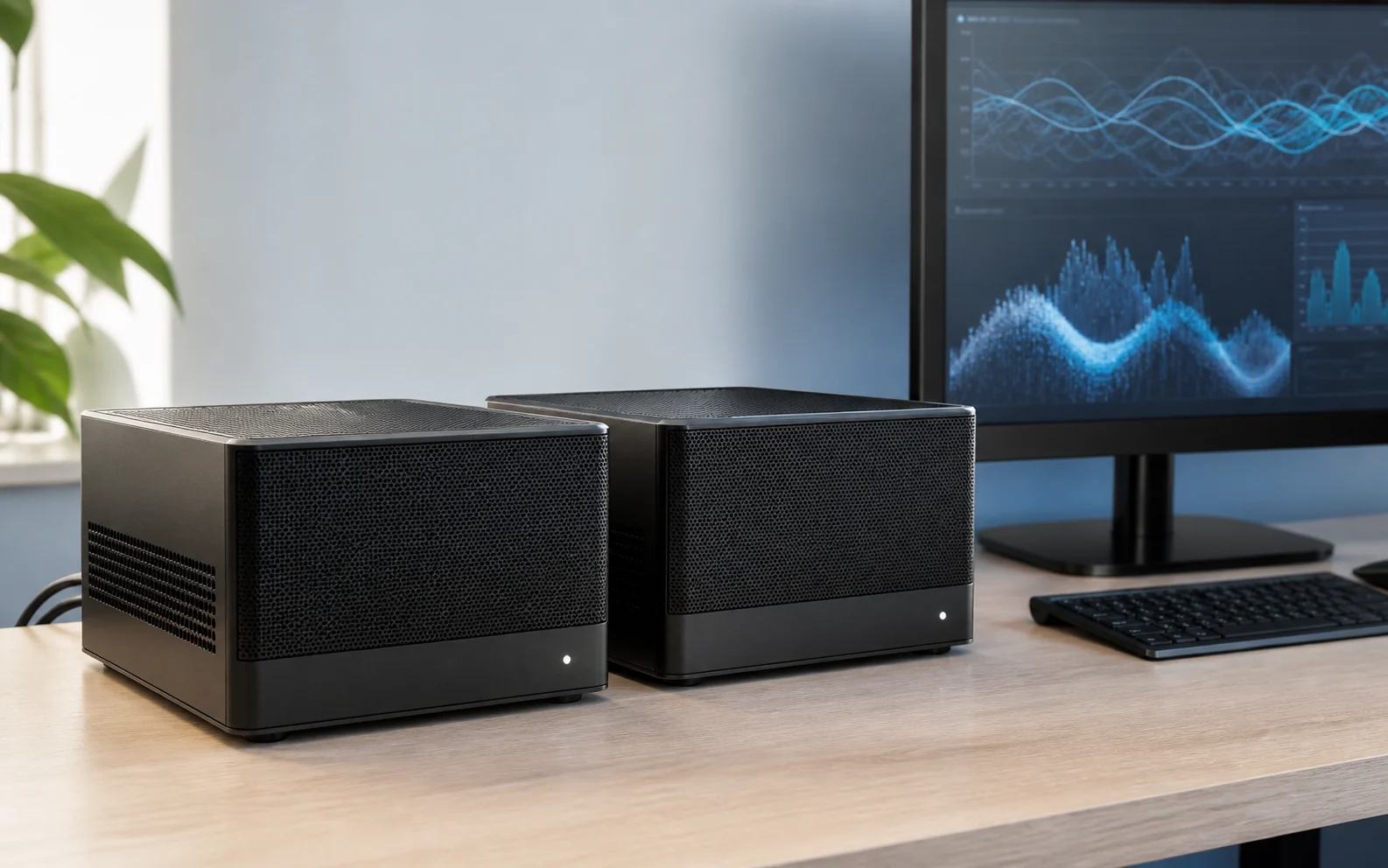
Frontier models provide speed for non-sensitive work. Local models keep confidential code, documents and security data inside a controlled environment. Both can be combined in a clearly separated workflow.
The images are photorealistic representations of the available system classes; they do not show the actual installation location.
AI-ASSISTED PENTESTING
AI can accelerate repeatable analysis and prepare additional test hypotheses. It replaces neither a pentester’s experience nor manual assessment of a potential attack.
AI agents generate hypotheses, use tightly restricted tools and collect evidence. An experienced pentester evaluates relevance, risk and possible attack chains.
Target system, source code and vulnerability data can be processed with local models. The architecture is not tied to one model provider.
CLIENT FEEDBACK / OFFENSIVE IT SECURITY
“Damian found a large amount of malicious code that even the host had completely missed, removed it reliably, closed every gap and gave many useful security recommendations. I felt in excellent hands, at a fair price.
“After repeated manipulation attempts Damian addressed the issue immediately and secured the application. We have had no further problems and are very grateful.
FREQUENTLY ASKED QUESTIONS / PENTEST FREELANCER BERLIN
Clear answers about the start, collaboration, data protection and budget before you invest time in a long sales process.
View security services ↗DSecured is the specialist environment for scopes, contracts, assessment delivery, reporting and ongoing security services. This portfolio explains the connection to my development work and links to the detailed security offering.
Typical scopes include web applications, APIs, mobile applications, external infrastructure, networks and selected source code. The exact depth depends on risks, access and the agreed rules of engagement.
Yes. Local inference infrastructure is available for work involving source code, vulnerability details and confidential system data. External models are not required for those workflows.
Useful information includes the target, technology, roles, interfaces, environment, desired depth and deadline. A short scoping call usually resolves remaining questions.
Automation supports discovery and repeatable checks. Relevant findings, business-logic issues and combined attack paths are assessed manually and backed by reproducible evidence.
Duration depends on scope, roles, interfaces and depth. A focused application can take days; complex platforms or several targets take longer. The schedule and reporting points are agreed before the test.
Cost follows scope and depth rather than a generic page count. After scoping, you receive a transparent proposal with targets, assumptions, deliverables and retest conditions.
No. AI can accelerate repeatable analysis and prepare additional hypotheses. Authorisation logic, workflow abuse and realistic impact still require experienced manual assessment.
IT SECURITY / DSECURED
Pentests, continuous attack surface analysis and further security services are delivered through DSecured.